Instagram Engagement Rate Explained: Formula, Benchmarks & How to Improve It
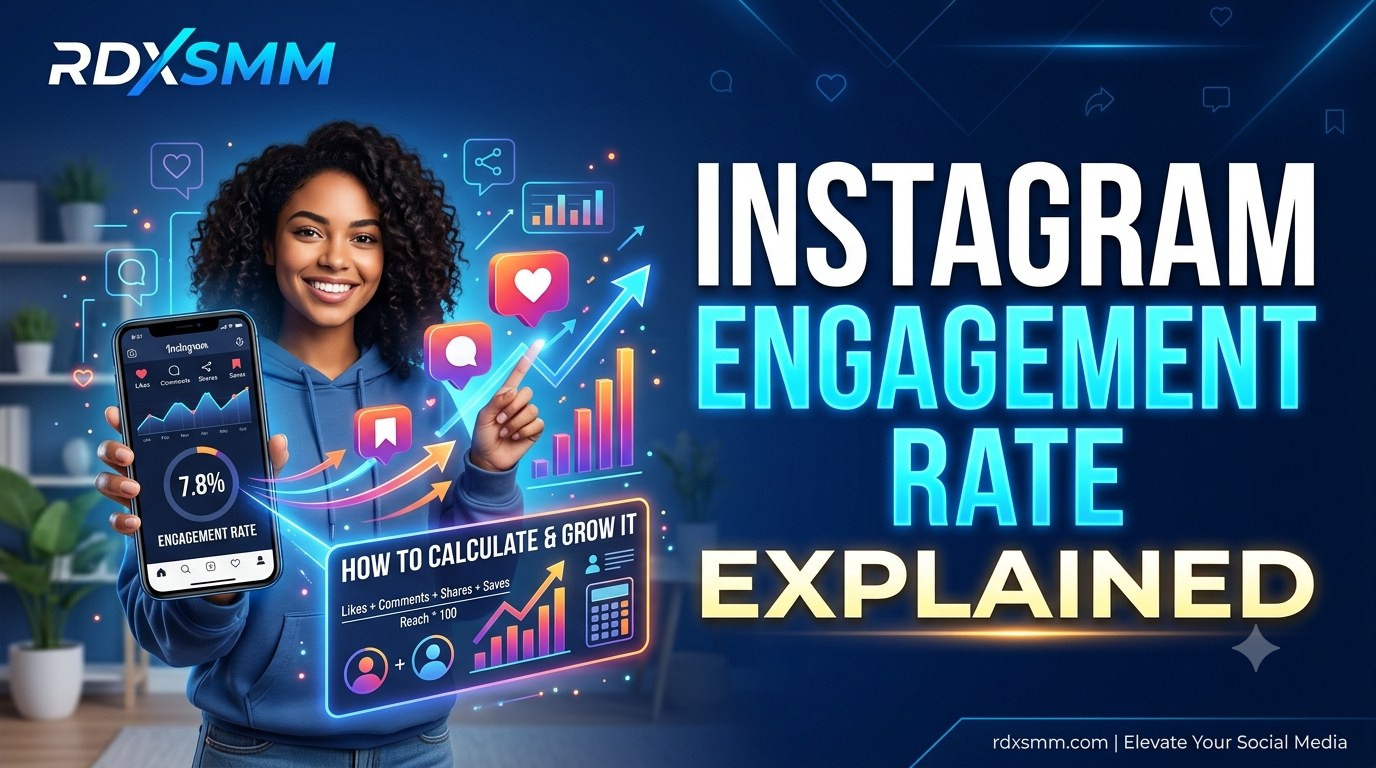
Instagram Engagement Rate Explained: Formula, Benchmarks & How to Improve It
If you want to understand whether your Instagram content is actually connecting with your audience, Instagram engagement rate is one of the most useful metrics to track.
Follower count tells you how many people follow an account, but engagement tells you how actively people interact with its content. Likes, comments, shares, saves and other interactions can provide a much better picture of how interested an audience is in what an account publishes.
In this complete guide, we'll explain what Instagram engagement rate means, how to calculate it, what counts as engagement, what a good engagement rate can look like, and practical ways to improve your Instagram engagement.
What Is Instagram Engagement Rate?
Instagram engagement rate is a percentage that measures how much people interact with your content compared with a chosen audience measurement, such as your follower count or the number of people your content reached.
Common Instagram interactions include:
- Likes
- Comments
- Shares
- Saves
- Replies and other interactions, depending on the measurement method
The exact calculation can vary because different tools use different formulas. For example, engagement rate can be calculated using followers, reach, impressions or views as the denominator.
This is important because two tools can report different engagement rates for the same Instagram post if they use different formulas.
Why Is Instagram Engagement Rate Important?
A high follower count doesn't necessarily mean an account has an active audience.
Imagine two Instagram accounts:
Account A
- 50,000 followers
- 100 likes on a post
Account B
- 5,000 followers
- 300 likes and comments on a post
Account A has more followers, but Account B may have a more active audience relative to its size.
Engagement rate helps creators and businesses look beyond follower numbers and understand how audiences respond to their content.
It can help you:
- Compare different posts
- Identify successful content
- Understand audience interest
- Evaluate content strategies
- Track changes over time
- Compare performance against relevant benchmarks
However, engagement rate should not be viewed in isolation. Reach, follower growth, website visits, conversions and other metrics may also matter depending on your goals.
Instagram Engagement Rate Formula
There isn't just one universal Instagram engagement rate formula.
Two commonly used approaches are engagement rate by followers and engagement rate by reach.
Engagement Rate by Followers
A simple follower-based formula is:
Engagement Rate = Total Engagements ÷ Total Followers × 100
For example, suppose an Instagram account has:
- 10,000 followers
- 500 total engagements on a post
The calculation would be:
500 ÷ 10,000 × 100 = 5%
So the engagement rate by followers would be 5%.
This method provides a simple way to compare individual posts against the account's follower base.
Engagement Rate by Reach
Another useful method is engagement rate by reach (ERR).
The formula is:
ERR = Total Engagements ÷ Reach × 100
For example:
- Total engagements = 300
- Reach = 6,000
Calculation:
300 ÷ 6,000 × 100 = 5%
The engagement rate by reach is therefore 5%.
This method can be particularly useful for organic content because it measures engagement among people who actually saw the content.
Which Instagram Engagement Rate Formula Should You Use?
It depends on what you are trying to measure.
Use engagement rate by followers when:
- Comparing posts using a consistent follower-based benchmark
- You don't have reliable reach data
- You want a simple account-level comparison
Use engagement rate by reach when:
- You want to understand how people who actually saw the content responded
- You're analyzing organic content
- You have reliable reach data
For video content, you can also compare engagement with views. For paid campaigns, engagement relative to impressions can be useful.
The most important thing is to use the same formula consistently when comparing results.
What Counts as Instagram Engagement?
Engagement isn't limited to likes.
Depending on the reporting method you're using, relevant interactions can include:
Likes
Likes are one of the easiest forms of interaction to measure.
They can indicate that someone enjoyed or appreciated a post, although a like alone doesn't tell you why someone interacted with the content.
Comments
Comments generally require more effort than simply tapping the Like button.
A post generating meaningful conversations can therefore provide useful insight into audience interest.
Shares
Shares can be particularly valuable because someone is actively sending your content to another person or sharing it with their audience.
Saves
Saves can indicate that users consider a piece of content useful enough to return to later.
For educational content, tutorials, checklists and tips, saves can be an especially useful metric to monitor.
Different analytics tools may include different interaction types, so always check how your chosen tool defines engagement before comparing numbers.
What Is a Good Instagram Engagement Rate?
There is no single engagement rate that is automatically good for every Instagram account.
Performance can vary depending on:
- Industry
- Audience size
- Content format
- Account type
- Audience quality
- Reach
- Content topic
- Measurement method
Recent industry guidance commonly places social engagement rates within a broad range rather than using one universal target. Hootsuite notes that a typical "good" social engagement rate can fall around 1%–5%, while its Instagram-specific data shows significant variation by account type and industry.
Therefore, don't automatically assume that a 2% engagement rate is bad or that a 10% rate is always excellent.
Your best benchmark is often your own historical performance combined with relevant industry comparisons.
Does Follower Count Affect Engagement Rate?
Yes, engagement rates can change as an account grows.
A smaller account may have a highly concentrated audience that interacts frequently. As an account gains more followers, the percentage of followers interacting with each post may change.
This is one reason why comparing a small creator with a large brand using a single universal engagement-rate target can be misleading.
Instead of asking:
"What engagement rate should every Instagram account have?"
ask:
"Is my engagement rate improving compared with my previous content and relevant competitors?"
Instagram Engagement Rate vs Follower Count
Follower count measures the size of your audience.
Engagement rate measures how actively people interact with your content.
Neither metric tells the complete story.
For example, an account with 100,000 followers and very little interaction may have less active audience participation than an account with 10,000 followers and strong comments, shares and saves.
This is why marketers often look at engagement alongside reach, impressions, follower growth and conversions rather than using follower count alone.
How to Increase Instagram Engagement Rate
If your engagement rate is lower than you want, don't simply try to get more likes.
Instead, improve the overall quality and relevance of your content.
1. Create Content for a Specific Audience
Know who you're creating content for.
Consider:
- Their interests
- Their problems
- Their questions
- Their goals
- Their preferred content formats
A clearly defined audience makes it easier to create relevant content.
2. Create More Shareable Content
Try creating content that people naturally want to send to friends or colleagues.
Examples include:
- Useful tips
- Checklists
- Tutorials
- Mistakes to avoid
- Industry information
- Relatable content
- Educational carousels
3. Encourage Genuine Conversations
Instead of asking for generic comments such as "Comment YES," ask questions that are actually relevant to the topic.
For example:
"Which Instagram metric do you find hardest to understand?"
This gives people a real reason to respond.
4. Experiment With Reels
Reels can help creators reach people beyond their existing followers.
Experiment with:
- Educational Reels
- Short tutorials
- Tips
- Behind-the-scenes videos
- Demonstrations
- Storytelling
- Niche-specific topics
Track which formats generate the strongest combination of reach and engagement.
5. Improve Your Content Hook
The opening of a Reel or caption should make the topic immediately clear.
Instead of:
"Today I want to talk about Instagram..."
Try:
"Your Instagram followers are increasing, but engagement is falling. Here's why."
A clear opening gives the audience a reason to continue.
6. Use Instagram Stories
Stories provide additional opportunities to interact with your audience.
You can experiment with:
- Polls
- Questions
- Quizzes
- Behind-the-scenes content
- Product updates
- Short tips
Monitor which Story formats receive the most responses.
7. Study Your Analytics
Don't guess what your audience likes.
Look at your available Instagram analytics and compare different posts.
Identify:
- Highest-reach posts
- Most-shared posts
- Most-saved posts
- Posts generating profile visits
- Posts generating comments
- Reels generating strong watch activity
Then create more content around the topics and formats that consistently perform well.
Common Instagram Engagement Mistakes
Focusing only on likes
Likes are useful, but shares, saves, comments, reach and other actions can provide additional information.
Comparing yourself to unrelated accounts
A finance account and an entertainment account may have completely different engagement patterns.
Compare yourself with relevant accounts and your own historical data.
Changing strategy every few days
One poor-performing post doesn't necessarily mean your entire strategy is wrong.
Look for patterns across multiple posts.
Using engagement bait
Artificially encouraging meaningless interactions may give you numbers without creating a genuinely interested audience.
Focus on useful content and authentic conversations.
Obsessing over one benchmark
There is no universal engagement-rate number that guarantees success.
The context behind the percentage matters.
How RdxSMM.com Fits Into Social Media Marketing
For creators, businesses and social media marketers, RdxSMM.com can be explored as an SMM panel for accessing different social media marketing services.
However, services and promotional tools should not replace a strong content strategy.
A sustainable Instagram strategy should focus on:
Useful content + consistent publishing + genuine engagement + analytics + smart promotion.
If you're exploring social media marketing services, you can visit RdxSMM.com and review the available options based on your particular marketing requirements.
Frequently Asked Questions
What is Instagram engagement rate?
Instagram engagement rate is a percentage that measures how actively people interact with Instagram content relative to a selected audience measurement such as followers or reach.
How do I calculate Instagram engagement rate?
A common follower-based formula is:
Total engagements ÷ total followers × 100
For engagement rate by reach:
Total engagements ÷ reach × 100
Different tools may use different formulas.
Is 3% a good Instagram engagement rate?
It can be a healthy result depending on the account, industry, content type and calculation method. There is no universal number that applies to every Instagram account.
Is engagement rate more important than followers?
Neither metric should be viewed alone. Followers measure audience size, while engagement rate helps measure interaction relative to that audience or reach.
What increases Instagram engagement?
Relevant content, strong hooks, useful information, conversations, shareable posts, Reels, Stories and consistent analysis can all contribute to stronger engagement.
Do saves and shares count as engagement?
They can. Many Instagram engagement calculations include likes, comments, shares and saves, although the exact definition varies by tool and formula.
Should I calculate engagement rate by followers or reach?
Use the method that matches your objective and data. Engagement rate by reach can be particularly useful for understanding how people who actually saw an organic post interacted with it.
Final Thoughts
Instagram engagement rate is more than just a percentage. It can help you understand whether your content is attracting meaningful interaction from your audience.
Instead of chasing a specific number, track your engagement consistently and look for trends.
Create content your audience genuinely wants, encourage meaningful conversations, analyze your results, and continue improving your strategy.
If you're also looking for social media marketing services and tools, RdxSMM.com can be another resource to explore as part of a broader social media marketing strategy.
The long-term goal isn't simply to have more followers or higher numbers—it's to build an audience that watches, interacts with, shares and values your content.